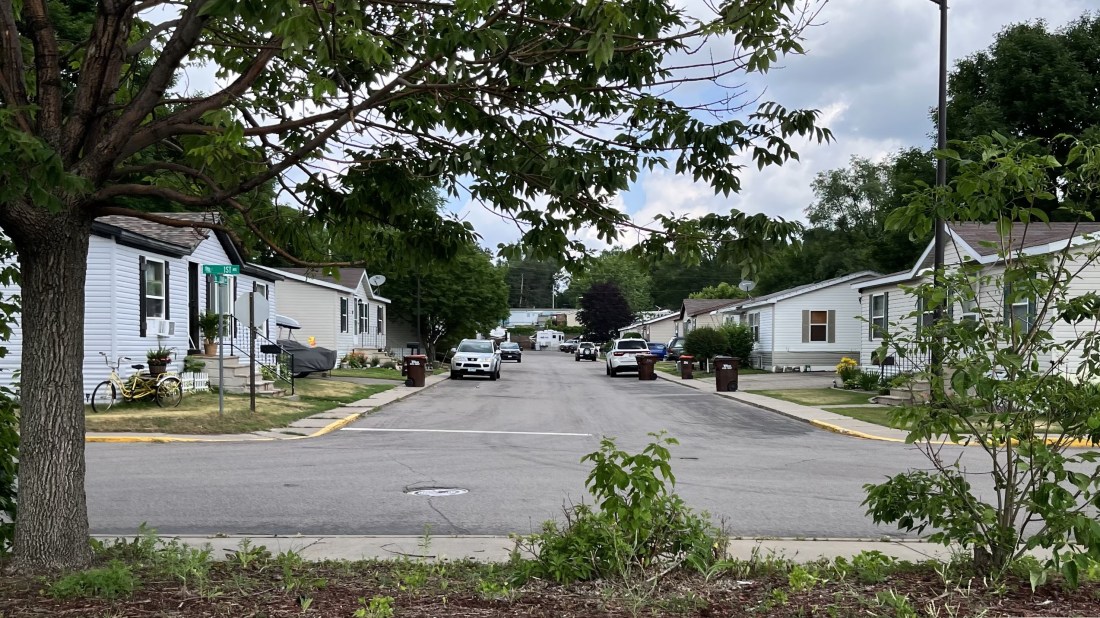
Nestled on the banks of Tanner’s Lake, just north of Interstate 94 and surrounded by the City of Oakdale, lies Landfall Village, population 843. Only 52 acres in size (11 of which are lake), Landfall consists of 307 manufactured homes, a cluster of year-round RV lots, and two commercial entities – Harley-Davidson and Indian Motorcycle. It is known as the smallest and most affordable community in Washington County.

This year, Landfall is getting a big dose of flower power, thanks to Washington Conservation District and a grant from the Minnesota Board of Water and Soil Resources “Lawns to Legumes” program. The goal is to improve pollinator habitat and beautify the community. Landfall’s pollinator demonstration project features new native plantings on Tanner’s Lake, as well as at the Tot Lot playground, the community center, and a neighborhood cul de sac, and will also create a demonstration bee lawn behind the community center. Pocket gardens and raised-bed pollinator plantings at individual homes may be included in the plan as well for interested residents.


In addition to its diminutive size, the City of Landfall has several other claims to fame. It was originally part of Oakdale township, which was one of the first townships organized in Washington County when Minnesota became a state in 1858. In the early 1900s, the land here was home to a small cabin surrounded by farmland, where the notorious gangster John Dillinger is rumored to have stayed in the 1930s. James and Mitzi Olson eventually bought the farm and developed it into a mobile home park known as Landfall Village in 1953. Landfall incorporated as a village in 1959 and later became a city in 1974. Today, Landfall and Hilltop (located in the north metro) are the only two cities in Minnesota that are almost entirely comprised of manufactured homes.
When Washington Conservation District began working with the Board of Water and Soil Resources to map pollinator habitat in Washington County, they identified several priority locations where marginal habitat could be improved to connect and increase the size of core habitat areas. These “pollinator sweet spots” include communities such as Landfall, which is located near Tanners Lake and Battle Creek Lake and not far from Battle Creek Regional Park. In addition, the Washington Conservation District is also working to enhance pollinator habitat in Lake St. Croix Beach and Willernie.

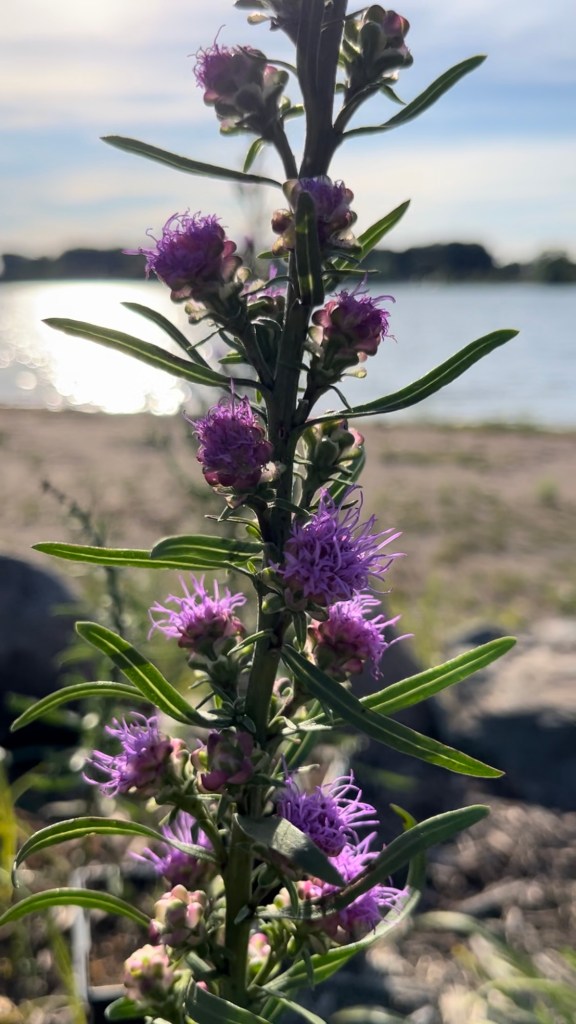

The new pollinator gardens in Landfall include native grasses such as little bluestem, side oats grama, and prairie dropseed, as well as several dozen species of native flowers, selected for their pollinator value. The bee lawn at the community center will feature a mix of Dutch-white clover, creeping thyme, self-heal, and ground plum. In the Tot Lot, invasive shrubs will be replaced with native flowering trees, including pagoda dogwood, dwarf bush honeysuckle, and grey dogwood. The planting projects are spread throughout the community and are designed to beautify public spaces, while also reducing the need to mow. In future years, the Conservation District hopes to continue its partnership with Landfall with additional conservation plantings and stormwater retrofit projects.
If you are interested in helping to create pollinator habitat in Washington County’s smallest city, there is one last planting event scheduled for this Saturday, September 30, 10am-noon at Landfall’s Tot Lot Playground (corner of Linden Lane and 5th Ave.). Contact Brett Stolpestad with questions or to RSVP: bstolpestad@mnwcd.org.


